
Packaging is one of those costs that creeps up on food businesses. It sits at 3 to 8 percent of revenue for most restaurants and cloud kitchens, and because it gets ordered in small batches by whoever notices the shelf is empty, nobody really tracks it. Then a quarter ends, the numbers come in, and the packaging bill looks bigger than the electricity bill.
The usual reaction is to buy cheaper stock. That works for about two weeks, until a dal makhani leaks into a delivery bag and a one-star review shows up with photos. Cutting packaging costs is a real, achievable goal. Cutting packaging quality is how you end up paying for refunds instead.
Here are six ways to bring the bill down while your food still reaches customers the way it left your kitchen.
1. Audit Before You Negotiate
Most kitchens don't know their per-order packaging cost. Work it out. Pull one month of purchase invoices, divide by the number of orders, and you'll have a number to beat.
While you're at it, note what actually gets used per dish. A biryani order in many kitchens goes out with a container, a lid, foil wrap, a carry bag, cutlery, and two sauce cups. Does it need all of that?
The audit usually finds two things: items that are over-specced (a 750 ml container holding a 400 ml portion) and items nobody remembers ordering.
Fixing those two alone typically trims 10 to 15 percent off the monthly spend before you've spoken to a single supplier.
2. Match the Material to the Food
A lot of waste comes from using one material for everything.
Foil handles hot, oily, and gravy-heavy dishes because it blocks light, oxygen, and moisture completely. Cling film is for cold storage and prep, and butter paper is for dry snacks and baked items.
Each has a job.
When you wrap a cold sandwich in foil, you're paying foil prices for a job paper wrap does at a fraction of the cost. And when you send curry out in a thin plastic tub to save two rupees, the leak costs you the order.
Assign a default material to each menu category once, print the list, and stick it near the packing station.
The savings come from the kitchen following it every day, not from the decision itself.
3. Right-Size Your Containers
Oversized packaging wastes money twice. You pay more per unit, and the extra headspace lets food slide around, which means more spillage complaints.
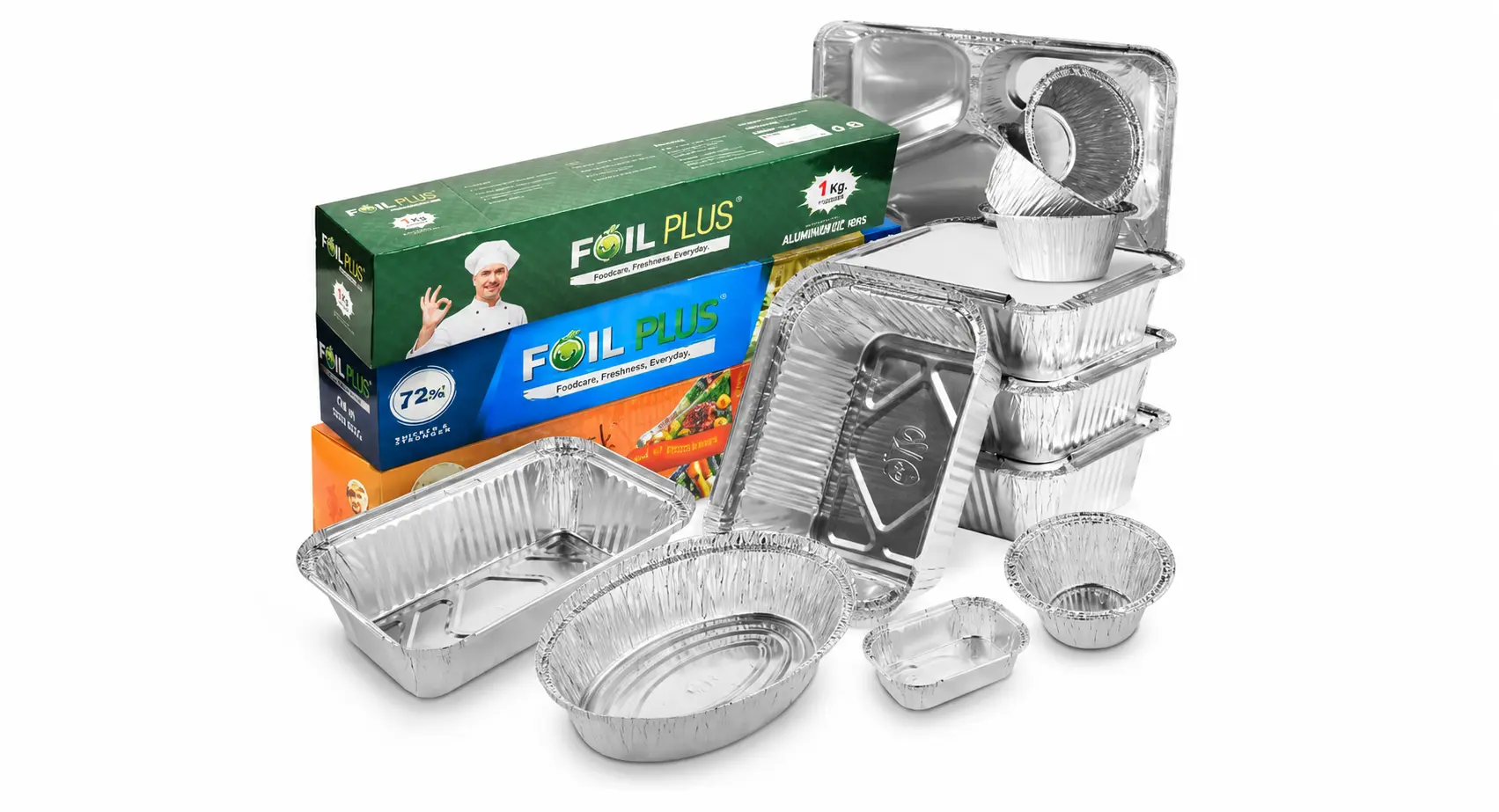
Measure your actual portion sizes and buy aluminium foil containers in capacities that match them, with around 15 percent headroom for gravies.
- 250 ml containers for sides
- 450 ml containers for mains
- 750 ml containers for family portions
Smaller kitchens and home businesses that can't commit to bulk cartons can start with 25-piece container packs to test sizes against real orders before scaling up.
Two weeks of testing beats six months of stock sitting in the wrong size.
4. Buy Certified, Skip the Hidden Costs
Uncertified foil looks identical on the shelf and costs less per roll. The difference shows up later.
Non-food-grade material can pinhole, tear during service, or fail an FSSAI inspection, and any one of those costs more than the savings ever were.
ISI-marked foil, certified by the Bureau of Indian Standards, is tested for thickness consistency and food contact safety, so a 9-micron roll actually behaves like one instead of tearing at 6 microns in the thin patches.
Consistent thickness also means predictable coverage. You get the number of wraps per roll you planned for, which makes the per-order math from your audit hold up.
Choosing certified packaging is often cheaper in the long run than replacing damaged stock and handling customer complaints.
5. Standardise SKUs and Consolidate Suppliers
Every extra packaging SKU adds ordering effort, storage space, and minimum order quantities.
If your kitchen stocks four container sizes, three wrap types, and two bag styles from five different vendors, you're paying five delivery charges and hitting nobody's volume discount slab.
Trim the list to what your menu genuinely needs.
- Foil rolls for hot wrapping
- Two or three container sizes
- Cling wrap for cold prep
- Zip lock bags for portioned storage
Move that consolidated order to one or two suppliers and negotiate on the combined volume.
Manufacturers can often provide better rates than trading intermediaries because there is no middle margin involved.
6. Turn Packaging into Marketing with Private Label
Once your monthly volumes are steady, plain packaging is a missed opportunity.
A branded container or printed wrap does two jobs for the price of one: it packs the food and advertises your business on every delivery, shared table, and office lunch.
Compared with the cost of stickers and other promotional materials, private label packaging often delivers a lower cost per impression.
Private label packaging can also lock in pricing, making annual budgeting much easier.
The Bottom Line
Reducing packaging costs is mostly a discipline problem, not a sourcing problem.
Audit what you use, match materials to dishes, size containers to portions, insist on certified stock, and consolidate your buying.
Do those five things and the savings usually land between 15 and 25 percent, with fewer leaks and complaints rather than more.
The goal is not to buy cheaper packaging. The goal is to buy smarter packaging.
Need Help Choosing the Right Packaging?
If you'd like help working out which sizes and materials fit your menu, talk to our team at Foilplus.
We manufacture food-grade packaging in Pune and supply kitchens across India, so we've seen most of these problems solved before.
Send us your current packaging list and we'll tell you where the money is hiding.
Enjoyed this fresh perspective? Want to bring behavioral insights into your product, brand, or kitchen?
Get in touch here