
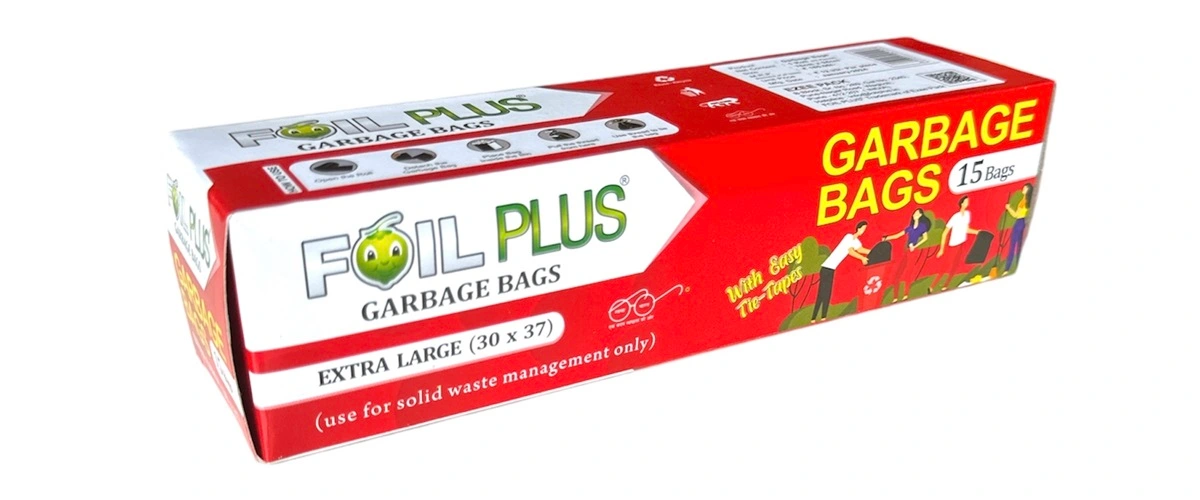
Most waste segregation systems don't fail because people don't care. They fail because the setup is weak.
And one of the most ignored parts of that setup? Garbage bags.
They look basic. They're not. They decide whether waste stays sorted or gets mixed before it even leaves your space.
What Is A Garbage Bag?
A garbage bag is the first checkpoint in waste management. It's where segregation either starts properly or breaks immediately.
In simple terms, it does three jobs:
- 1. Holds waste without leakage
- 2. Keeps categories separate
- 3. Makes handling and transport easier
If a bag leaks or tears, segregation is gone. If the wrong waste goes in, sorting becomes harder downstream.
So yes, it's just a bag. But it controls the outcome.
What Are the Types of Garbage Bags?
Different waste needs different handling. Using one type of bag for everything is where most problems begin.
Here's what actually matters:
Biodegradable Bags
Used for wet waste like food scraps. They break down faster, which supports composting systems.
Compostable Bags
A step above biodegradable. They break down under controlled composting conditions without leaving toxic residue.
Standard Plastic Bags
Still widely used for dry waste. They're strong, but they don't break down easily. Misuse leads to long-term environmental load.
Color-Coded Bags
This is where segregation becomes practical:
- 1. Green means Wet waste
- 2. Blue means Dry waste
- 3. Red means Hazardous or biomedical waste
- 4. Black means Mixed or reject waste
Without color coding, segregation depends on memory. That's unreliable.
Heavy-Duty Bags
Used in commercial or industrial setups. They prevent tearing when handling sharp or bulky waste.
The takeaway is that the bag type should match the waste stream. Not the other way around.
The Role of Garbage Bags in Waste Segregation Process
Segregation is only effective when waste stays clean within its category. Garbage bags make that possible.
Here's how they directly impact the process:
- 1. Prevent cross-contamination: Wet waste leaking into dry waste ruins recyclables like paper and cardboard.
- 2. Protect waste quality: Clean dry waste has resale and recycling value. Contaminated waste doesn't.
- 3. Reduce manual sorting: The more mixed the waste, the more labor is needed later.
- 4. Improve collection speed: Clearly segregated bags are easier to pick, transport, and process.
If bags fail at any of these points, the entire chain slows down.
How Different Garbage Bags Influence the Waste Segregation Process?
This is where things get real. The type of bag you choose affects what happens after disposal.
When the right bags are used:
- • Recycling centers receive cleaner material
- • Composting units function properly
- • Waste workers face lower health risks
- • Processing time is reduced
When the wrong bags are used:
- • • Wet and dry waste mix early
- • Recyclables get rejected
- • Landfill volumes increase
- • Sorting costs go up
Example? Food waste in a thin plastic bag often leaks. That liquid contaminates nearby dry waste. Now, even recyclable material becomes unusable.
Another one: No separate bag for sanitary or hazardous waste. That creates direct risk for handlers.
So yes, the bag type shapes the entire downstream process.
How to Use Garbage Bags in Waste Segregation Process?
Execution is where most systems collapse. Not awareness.
Here's what actually works:
Keep the setup simple
- • Minimum three bins: wet, dry, hazardous
- • Each with a dedicated bag type
Stick to color coding
- • Don't mix “just for today”
- • Habits break faster than they build
Match bag strength to waste
- • Wet waste needs leak-proof bags
- • Dry waste needs standard bags
- • Sharp waste needs heavy-duty bags
Avoid overfilling
- • Overfilled bags tear
- • Torn bags mix waste during handling
Seal before disposal
- • Open bags spill
- • Spillage leads to contamination
Train users, not just managers
- • Housekeeping staff
- • Office teams
- • Residents
Segregation fails when only one group understands the system.
Audit occasionally
- • Check if segregation is actually happening
- • Fix gaps early instead of reacting later
This is not about perfection. It's about consistency.
Conclusion
Garbage bags don't get much attention. But they quietly control how effective your waste segregation really is.
If the right bag is used, waste stays clean, processing becomes easier, and recycling actually works.
If not, everything mixes early, and no system downstream can fully fix that.
Most people focus on bins, policies, or awareness campaigns. But the real shift happens in daily use.
One bag. One decision. Repeated every day. That's what makes segregation work or fail.
Do you want to know more about which garbage bag to use for waste management? Visit our page
Enjoyed this fresh perspective? Want to bring behavioral insights into your product, brand, or kitchen?
Get in touch here